
“Your Microwave Can Actually Cook: A Complete Guide for Students & Migrant Workers Living Solo
Why This Article Might Just Save Your Dinner (And Your Budget)
Look, I get it. You’re miles from home, your kitchen is basically a closet with a microwave, and the thought of cooking feels impossible right now. You’re tired. Maybe a little homesick. And that sad sandwich from the convenience store is starting to look like dinner again.
But here’s the thing—you don’t need a full kitchen to eat well. You really don’t.
This article isn’t about becoming a chef or impressing anyone. It’s about eating real food that tastes good, costs way less than takeout, and doesn’t make you feel like you’re just surviving. Because you deserve better than instant ramen every night, even when you’re exhausted from work or classes.
The Truth About Microwave Cooking (It’s Not What You Think)
Okay, real talk. Most people think microwaves are just for reheating leftovers or making sad, rubbery scrambled eggs. And yeah, if that’s all you’ve tried, I don’t blame you for being skeptical.
But microwaves can actually cook. Like, properly cook. Once you understand how they work-heating food with electromagnetic waves that make water molecules vibrate-you can use them to steam vegetables perfectly, cook fluffy rice, make creamy pasta dishes, and even bake mug cakes that don’t taste like rubber.
The secret? It’s all about timing, covering your food, and knowing which containers to use.
The Definitive Equipment Guide: What You Actually Need
Essential Tools (10-12 Items That’ll Change Everything)

Listen, you don’t need to spend a fortune. Here’s exactly what you need and where to get it cheap:
1. Microwave-Safe Containers & Bowls (3-4 pieces)
- What to buy: Glass or ceramic bowls with lids
- Where: IKEA MIXTUR bowl set ($5.99 for 4) or Dollar Store glass bowls ($1-2 each)
- Amazon option: Pyrex Simply Store 10-Piece Set (~$25)
- Why: Glass is safe, won’t stain, and lasts forever
2. Microwave Rice Cooker ($8-15)
- Best budget pick: Sistema Microwave Rice Cooker (Amazon, $10)
- Dollar Store alternative: Any microwave-safe container with lid + water ratio guide
- Why you need it: Perfect rice every single time, no burning
3. Microwave Steamer ($5-12)
- IKEA: STABIL steamer insert ($4.99)
- Amazon: OXO Good Grips steamer ($12)
- DIY option: Use any bowl + microwave-safe plate as lid
- Why: Vegetables that don’t turn to mush
4. Microwave Pasta Cooker ($8-15)
- Best: Fasta Pasta Microwave Cooker (Amazon, $14)
- Alternative: Large microwave-safe bowl (just watch it doesn’t boil over)
- Why: Pasta without a stove. Life-changing.
5. Measuring Cups & Spoons ($3-8)
- Where: Literally anywhere-Dollar Store ($1), IKEA ($2.99), Target ($5)
- Get: 1-cup and 2-cup measures, basic spoon set
- Why: Consistency matters when you’re learning
6. Good Sharp Knife ($8-20)
- Budget: IKEA VÖRDA ($7.99)
- Better: Victorinox Fibrox 8-inch Chef’s Knife (Amazon, $40 but lasts years)
- Where cheap: Dollar Store paring knife ($1) works for basics
- Why: Dull knives are dangerous and frustrating
7. Cutting Board ($3-10)
- Plastic: Dollar Store ($1-3), easy to sanitize
- Wood: IKEA PROPPMÄTT ($6.99), easier on knives
- Pro tip: Get two if you can—one for raw stuff, one for everything else
8. Microwave Egg Cooker ($5-10)
- Sistema Microwave Easy Eggs (Amazon, $7)
- Alternative: Microwave-safe mug + fork for scrambling
- Why: Protein without burning down your dorm
9. Microwave-Safe Plates & Covers ($5-10)
- Plates: IKEA OFTAST (literally $0.49 each)
- Covers: Splatter guard from Dollar Store ($1) or Nordic Ware cover (Amazon, $8)
- Why: Nobody likes cleaning microwave explosions
10. Kitchen Towels & Potholders ($5-10)
- Where: Dollar Store, IKEA RINNIG set ($3.99 for 4 towels)
- Why: Things get hot. Protect your hands.
11. Can Opener ($2-8)
- Basic: Dollar Store ($1)
- Better: OXO Good Grips (Amazon, $13)
- Why: Canned beans, tomatoes, tuna = cheap protein and flavor
12. Colander/Strainer ($3-8)
- Dollar Store: $1 plastic one works fine
- IKEA: IDEALISK ($4.99)
- Why: Draining pasta, rinsing beans, washing vegetables
Total Cost Breakdown:
- Ultra-Budget Route: $30-50 (Dollar Store + basic IKEA)
- Quality-Budget Mix: $80-120 (mix of cheap and good stuff)
- Investment Route: $150-200 (quality items that last years)
Where to Actually Buy This Stuff:
Dollar Store/99¢ Store: Bowls, plates, utensils, basic tools, cleaning supplies IKEA: Mid-range everything, great for containers and basics Amazon: Best for specialized items (rice cookers, steamers), compare prices Target/Walmart: Good for sales, similar to IKEA pricing Thrift Stores: Glass bowls, plates, mugs (wash thoroughly!)
What You DON’T Need (Save Your Money)
Here’s what the internet will try to sell you that you absolutely don’t need:
❌ Microwave browning dish – Overpriced and unnecessary ❌ Fancy silicone molds – Unless you’re really into mug cakes (you’re not) ❌ Microwave pressure cooker – Sketchy safety, just no ❌ Bacon cooker – A plate with paper towel works fine ❌ Plastic storage containers – They stain and warp; get glass ❌ Vegetable peeler – Unless you really want one; washing is usually enough ❌ Garlic press – Just chop it or use jarred ❌ 20-piece knife set – One good knife beats ten bad ones
Building Your Ingredient Kit: The Pantry That Travels With You
Shelf-Stable Staples (These Last Forever):

Grains & Carbs:
- White rice (jasmine or long-grain)
- Instant noodles (upgrade from the packet kind)
- Pasta (spaghetti, penne, whatever you like)
- Instant oats
Proteins:
- Canned beans (black beans, chickpeas, kidney beans)
- Canned tuna or salmon
- Peanut butter (protein + cheap)
- Eggs (refrigerate, but last 3-5 weeks)
- Shelf-stable tofu (if you can find it)
Flavor Builders:
- Soy sauce
- Hot sauce (your preference)
- Garlic powder
- Onion powder
- Salt & pepper
- Dried herbs (oregano, basil)
- Bullion cubes or stock concentrate
- Tomato paste (small cans)
Canned/Jarred:
- Diced tomatoes
- Tomato sauce
- Salsa
- Curry paste (Thai or Indian)
- Coconut milk
Frozen (If you have a tiny freezer):
- Frozen vegetables (last 6-12 months)
- Frozen chicken breast
- Frozen shrimp
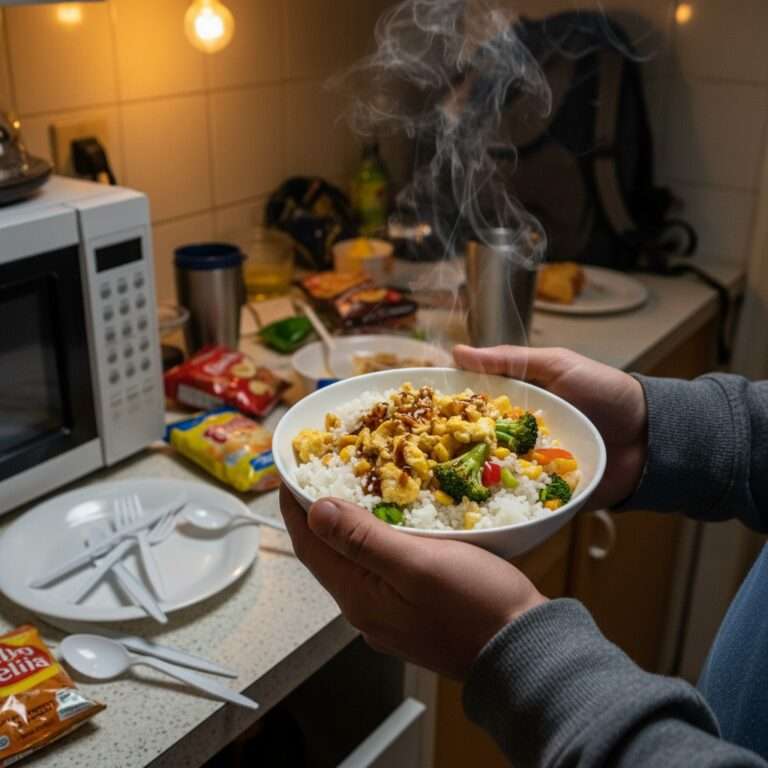
Recipe Card: Microwave Chicken Fried Rice
Summary: A complete one-bowl meal that tastes like takeout but costs $2 and takes 15 minutes. This was the first recipe that made me realize microwave cooking could actually be good. When you’re exhausted and homesick, this hits different-it’s warm, filling, and reminds you that you can still take care of yourself.
Ingredients:
- 1 cup cooked rice (leftover or microwave rice cooker)
- 1/2 cup frozen mixed vegetables
- 1 egg
- 2 oz cooked chicken breast, diced (or canned chicken)
- 2 tbsp soy sauce
- 1 tsp sesame oil (or any oil)
- 1/4 tsp garlic powder
- Green onions (optional, but nice)
Instructions:
- In a microwave-safe bowl, combine rice, frozen vegetables, and diced chicken
- In a small bowl, beat the egg with soy sauce, oil, and garlic powder
- Pour egg mixture over rice mixture, stir well
- Microwave uncovered on high for 2 minutes
- Stir thoroughly, breaking up any egg clumps
- Microwave for another 1-2 minutes until egg is fully cooked
- Let stand 1 minute, stir again, top with green onions
Prep Time: 5 minutes
Cook Time: 4 minutes
Total Time: 9 minutes
Servings: 1 generous serving

Nutrition Facts (per serving):
- Calories: 425
- Protein: 28g
- Carbohydrates: 52g
- Fat: 11g
- Fiber: 4g
- Sodium: 890mg
- Sugar: 3g
Notes:
- Rice secret: Day-old refrigerated rice works BEST for fried rice. Fresh hot rice gets mushy.
- No chicken? Use canned tuna, scrambled tofu, or just extra egg. Still delicious.

- Vegetable swap: Literally any frozen veg works. Peas, carrots, corn, broccoli-whatever’s on sale.
- Spice it up: Add hot sauce, chili flakes, or a dollop of sriracha

- Make it authentic: A tiny splash of rice vinegar (if you have it) adds restaurant flavor
- Batch cooking: Triple this recipe on Sunday, portion it out, reheat all week
- Common mistake: Don’t skip the “stir halfway” step or you’ll get scrambled eggs on top, raw egg on bottom
- Equipment note: Use a bowl that’s twice the size of your ingredients-this bubbles up while cooking
- Leftover hack: This is literally the BEST use for leftover rice and random fridge vegetables
- Budget win: Restaurant fried rice = $8-12. This = $2. Make it 5x per month, save $50.
🍳 CookingRescue.com
A comprehensive microwave-only cookbook featuring recipes that transform basic ingredients into restaurant-quality meals using only microwave techniques.
Six More Microwave Recipes That Don’t Suck
1. Creamy Tomato Pasta (8 minutes)
Pasta + jar sauce + splash of milk + Italian seasoning. One bowl. Zero judgment.
2. Loaded Baked Potato (8-10 minutes)
Pierce potato, microwave 5-8 min until soft. Top with canned beans, salsa, cheese. Dinner.
3. Microwave Shakshuka (12 minutes)
Canned tomatoes + eggs + spices in a bowl. Microwave in intervals. Scoop with bread.
4. Teriyaki Salmon & Vegetables (10 minutes)
Frozen salmon fillet + frozen broccoli + teriyaki sauce + microwave steamer = fancy dinner

5. Chickpea Curry (10 minutes)
Canned chickpeas + coconut milk + curry paste + microwave = better than takeout
6. Breakfast Burrito Bowl (6 minutes)
Scrambled eggs + black beans + salsa + cheese + microwave. Eat from the bowl. No dishes.

Quick FAQ
Q: Is microwave cooking actually safe?
A: Yes, completely safe. Microwaves heat food by making water molecules vibrate—they don’t make food radioactive or change its chemistry in harmful ways. Just use microwave-safe containers (glass, ceramic, microwave-safe plastic—never metal).
Q: Will I lose nutrients cooking in a microwave?
A: Actually, no. Microwave cooking often preserves MORE nutrients than boiling because it uses less water and shorter cooking times. Vegetables especially retain more vitamins.
Q: How do I know if a container is microwave-safe?
A: Look for a microwave-safe symbol (usually wavy lines) on the bottom. When in doubt, use glass or ceramic. Avoid metal, aluminum foil, styrofoam, and plastic containers not marked microwave-safe.
Q: Why does my food cook unevenly?
A: Microwaves have hot and cold spots. Solutions: stir food halfway through, rotate the dish if your microwave doesn’t have a turntable, let food stand 1-2 minutes after cooking (it continues cooking), and use microwave-safe covers to trap steam.
Q: Can I meal prep with just a microwave?
A: Absolutely. Cook a big batch of rice, beans, or pasta on Sunday, portion into containers, refrigerate. Reheat throughout the week with different seasonings and toppings. Game changer.
Q: What if my microwave is really weak/old?
A: Most recipes assume 1000W. If yours is 700W, add 30-50% more time. If it’s 600W, double the time. Start with less time and add more—you can always cook longer.
Q: How do I prevent the “microwave explosion”?
A: Use a microwave-safe cover or damp paper towel, don’t overfill containers (leave 2-3 inches at top), and pierce foods with skin (potatoes, sausages) before cooking. Stir liquids before heating to prevent superheating.
Nutrition Quick Facts for Students & Workers Abroad
Why This Matters When You’re Far From Home:
When you’re stressed, lonely, and adjusting to a new place, nutrition often tanks. You’re tired. Everything’s different. Cooking feels hard. But eating poorly makes everything worse-your energy, your mood, your immune system, your ability to focus.
Key Nutrients You Might Be Missing:
- Protein (builds muscle, keeps you full, stabilizes mood)
- Target: 50-100g per day depending on your size
- Easy sources: Eggs, canned fish, beans, peanut butter, Greek yogurt
- Why it matters: Prevents muscle loss, keeps you feeling satisfied
- Fiber (digestion, heart health, keeps you regular)
- Target: 25-35g per day
- Easy sources: Beans, frozen vegetables, brown rice, oats, canned tomatoes
- Why it matters: Processed food = low fiber = feeling terrible
- Iron (prevents fatigue, crucial for focus)
- Target: 8-18mg per day (higher for menstruating people)
- Easy sources: Canned beans, fortified cereals, canned tuna, spinach
- Tip: Pair with vitamin C (orange juice, tomatoes) for better absorption
- Vitamin D (mood, immune system, bone health)
- Target: 600-800 IU per day
- Sources: Fortified milk, canned salmon, eggs, mushrooms
- Real talk: If you’re inside all day, consider a supplement ($5/month)
- B Vitamins (energy, brain function, stress management)
- Sources: Eggs, beans, fortified grains, nutritional yeast
- Why it matters: Stress depletes B vitamins fast
Simple Rules for Not Feeling Like Garbage:
- Eat protein at every meal (even if it’s just an egg or spoonful of peanut butter)
- Frozen vegetables count (seriously, they’re flash-frozen at peak nutrition)
- Hydrate (dehydration mimics depression and kills focus)
- Don’t skip meals (your brain needs regular fuel)
- One piece of fruit a day (any fruit, canned counts)
Warning Signs You Need to Eat Better:
- Constantly tired even after sleep
- Can’t focus on work/studies
- Getting sick more often
- Hair thinning or skin issues
- Mood swings or feeling depressed
- Digestive problems
You don’t need to be perfect. But eating one real meal a day instead of all processed food? That actually makes a difference.

Cost Breakdown: Homemade vs. Takeout
Real Numbers From Real Life:
| Meal | Takeout Cost | Homemade Cost | Savings Per Meal | Monthly Savings (20 meals) |
|---|---|---|---|---|
| Fried Rice | $9-13 | $2.00 | $9.00 | $180 |
| Pasta with Sauce | $10-15 | $1.75 | $11.00 | $220 |
| Burrito Bowl | $8-11 | $2.50 | $7.50 | $150 |
| Curry & Rice | $12-16 | $3.00 | $11.00 | $220 |
| Sandwich & Chips | $8-10 | $2.25 | $7.00 | $140 |
| Breakfast Burrito | $7-9 | $1.50 | $6.50 | $130 |
| Salmon & Vegetables | $15-20 | $4.50 | $13.00 | $260 |
| Loaded Baked Potato | $8-12 | $2.00 | $8.50 | $170 |
Average Savings: $9.30 per meal = $186-465 per month depending on how often you cook
Real-World Example:
- Cook dinner 5 nights/week, buy lunch 5 days/week
- Homemade dinners: ~$50/month
- Packed lunches from leftovers: ~$30/month
- Total food cost: ~$80/month vs. $400-500 eating out
- Savings: $300-400/month = $3,600-4,800/year
That’s a plane ticket home. Or a month’s rent. Or money to actually enjoy your life instead of just surviving.
Initial Investment Payback:
- Spend $100 on equipment and starter ingredients
- Break even after cooking ~11 meals
- Everything after that is pure savings
The Emotional Piece Nobody Talks About
Here’s something I wish someone had told me: cooking when you’re far from home isn’t really about the food.

I mean, yeah, it’s about eating and saving money. But it’s also about having one thing you control when everything feels chaotic. It’s about creating routine. It’s about taking care of yourself when nobody else is around to do it.
Some nights, you’re going to be too tired. You’re going to order food. That’s fine. This isn’t about perfection.
But on the nights when you do cook-even if it’s just scrambling eggs or heating up beans and rice-you’re proving to yourself that you can do this. That you’re capable. That being far from home doesn’t mean you can’t have warm, real food.

And honestly? Sometimes the act of cooking is the only 15 minutes of your day that feels normal. Familiar. Like maybe you’re going to be okay.
So start small. Make the fried rice. See how you feel. Take it from there.
You’ve got this. Even on the hard days. Especially on the hard days.
One last thing: Save this article. Bookmark it. Screenshot the recipes. Because three months from now when you’re exhausted and broke and missing home, you’re going to need this. And it’ll still be here.